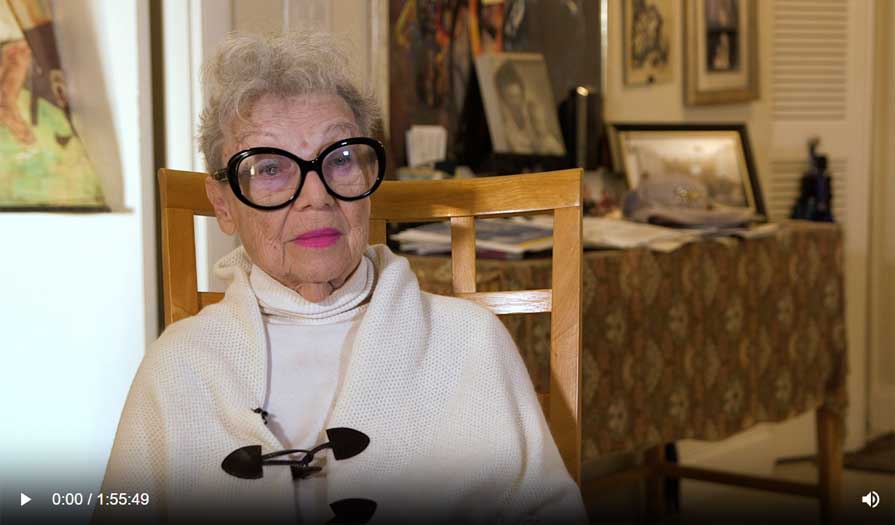
Professor Miriam Hoffman, the World’s Yiddishe Mameh, 20th-Century Child of the War, Who Became the 21st-Century Guardian of Yiddish
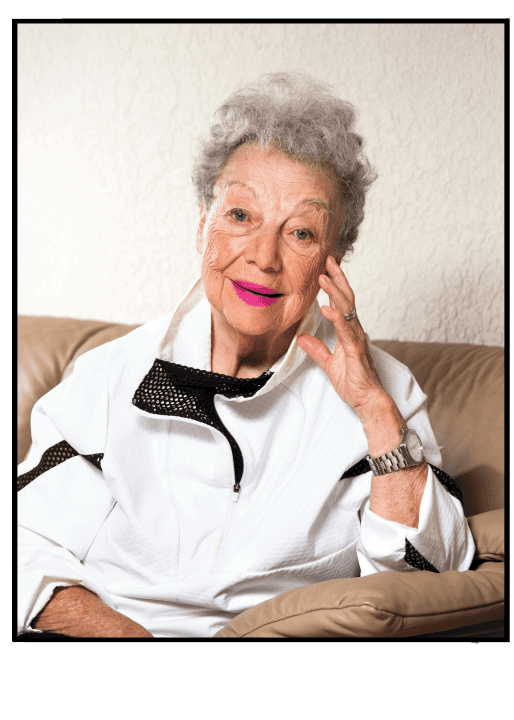 Professor Miriam Hoffman, the fiery, funny, and fiercely principled matriarch of modern Yiddish culture, has died, leaving behind a world whose memory of Jewish life between destruction and renewal is forever stamped with her voice, her pen, and her classroom chalk. She was best known as a world‑renowned scholar of Jewish and Yiddish culture, a prolific playwright and columnist, and the intellectual engine behind a global Yiddish renaissance that refused to treat the language of her childhood as a relic.
From Displaced Child to Relentless Teacher
Born Mirl Schmulewicz in Siberia in 1936 to Polish escapees arrested and sent to the Tobolsk Slave Labor Camp, she spent the World War II years in the Russian border town of Saratov. Unwelcome, after the War, in their native Polish city of Lodz, she walked, at the age of nine, with thousands of post-war refugees in a human caravan from Poland to the Hindenburg-Kaserne Displaced Persons Camp in Ulm, Germany. Raised in the shadow of barbed wire and bureaucracy, Hoffman carried the sounds of the D.P. camps into every lecture she gave and every joke she told. Her memoirs trace the unlikely arc from a little girl in a displaced persons camp to a distinguished professor of Yiddish language and Jewish culture at Columbia University, where she transformed private trauma into public pedagogy. Former students recall that she did not sentimentalize the past; instead, she unpacked it, grammatically and morally, until Yiddish became not just a language but a method of ‘resistance’ to forgetting the rich millenia old legacy of European Jewry.
When she later settled in the United States, Hoffman refused to let the American melting pot dilute the sharp flavors of her mother tongue. In essays and public talks, she dissected assimilation with scalpel-like precision, warning that Judaism’s “meltdown” in America could be the final act of a tragedy that began in Europe, if Jews willingly abandoned the language and culture that had sustained them. Yet her criticism always came wrapped in humor, because, as she liked to demonstrate, in Yiddish the punchline is often the only way to tell the truth without breaking.
Architect of a Living Yiddish
Hoffman’s academic career spanned six decades, beginning in the famed Bainbridge avenue Sholem Aleichem Folkshul #21, in The Bronx, and included 25 years as professor of Yiddish language and Jewish culture at Columbia University, where she turned an elective subject into a life‑altering encounter for thousands of students worldwide. Her 700‑page textbook “Key to Yiddish” became a standard for global Yiddish educators, a dense, practical, and subversively witty map for those determined to navigate a language many had prematurely buried. Beyond Columbia, she taught Yiddish language, literature, film, humor, and classical as well as “minor” Yiddish writers, insisting that the so‑called small voices of history were often the ones that told the biggest truths. Her public lectures and books on topics such as the origins of the alphabet and the folklore surrounding Curious Rabbinic Tales braided philology, midrash, and stand‑up comedy timing, collapsing the distance between biblical myth and immigrant kitchen table.
Playwright, Columnist, and Cultural Provocateur
Hoffman was an award‑winning playwright whose work stretched the stage between Vilna and Broadway. Collaborating with the late Broadway impresario Joseph Papp, she co-wrote, with her lifelong writing partner, Rena Borow, the book for the 1989 Yiddish musical “Songs of Paradise,” which Papp presented at The Public Theater, proving that Yiddish could hold its own under the most unforgiving theater lights in America. That production became a landmark revolution in the budding renewal of Yiddish theatre, culminating in recent productions of Godot, Death of a Salesman and Fiddler in Yiddish, demonstrating that the language of Eastern European streets could still entertain cosmopolitan New York audiences. For more than 35 years, Hoffman served as a weekly columnist for the Forverts (The Yiddish Forward), filing thousands of essays that blended blistering social critique with the sly intimacy of a family anecdote. Week after week, she interrogated Jewish life, politics, and memory, puncturing pretension with the quick jab of a Yiddish idiom and defending Yiddishkayt not as nostalgia but as a living ethical framework. Yiddish, she insisted in interviews, “will never die” because it contains too much life—too much argument, irony, and love—to vanish quietly.
Mother, Partner, and Co‑Founder in Yiddishkayt
In her later years, Hoffman extended her classroom far beyond the university when she and her son, renowned actor, director and producer Avi Hoffman, co-founded Yiddishkayt Initiative, Inc. and its global platform YILoveJewish.org. As founder and professor for the initiative, she shaped it into a worldwide resource for Jewish education, culture and entertainment. Mother and son became an inseparable cultural duo: he on stage, she at the desk, together devising plays, lectures, festivals, and commemorations that linked survivors’ memories with new generations’ curiosity. Their joint projects included explorations of Yiddish theater history, new works such as “Reflections of a Lost Poet”, “Noble Laureate: Mr. Singer & His Demons,” and many other plays and performances that turned family biography into communal ritual. In South Florida, where she later lived, Hoffman emerged as a central figure in a growing Yiddish community, reassuring skeptics that the language’s supposed last act was, in fact, an encore.
A Legacy That Refuses to End
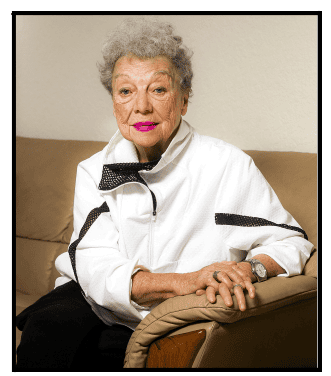 Hoffman is survived by a worldwide community of students, readers, theatergoers, and activists who learned from her that languages do not die of old age; they die of neglect. Her books sit dog‑eared on the desks of teachers and readers around the world, her plays continue to be read and revived, and her Yiddish columns, once consumed as weekly commentary, now read like a running chronicle of late‑20th‑ and early‑21st‑century Jewish life. The institutions she built and sustained—from university classrooms to the Yiddishkayt Initiative—remain charged with her stubborn insistence that Jewish culture must be both critical and compassionate, rooted and restless. In the echo of her jokes and in the cadences of students who conjugate their first Yiddish verb, one can still hear the child of survivors who grew up to tell the world, in uncompromising Yiddish and equally uncompromising English, that memory is not a museum but a living language.
In lieu of flowers or gifts, tax-deductible donations to support Professor Hoffman’s Yiddish legacy can be made to Yiddishkayt Initiative at www.YILoveJewish.org/donate She is survived by her two sons, Avi and Benjamin, four grandchildren and one great-grandchild.
The Yiddish Book Center’s Wexler Oral History Of Miriam Hoffman